Search this site

Transformation guide · By LA Strategy Institute · Published October 22, 2026 · Updated October 22, 2026

Target operating model: decide how the organization will work before the transformation is funded.

A target operating model is the written description of how an organization will work after a planned change, on six dimensions: customers and value, processes, people and structure, technology and data, governance, and measurement. This guide gives the definition, the six dimensions with a published source for each, four levels to describe them, a five-step design order with an owner and an output per step, a worked example, and a current-versus-target grid that runs in the browser and stores nothing.

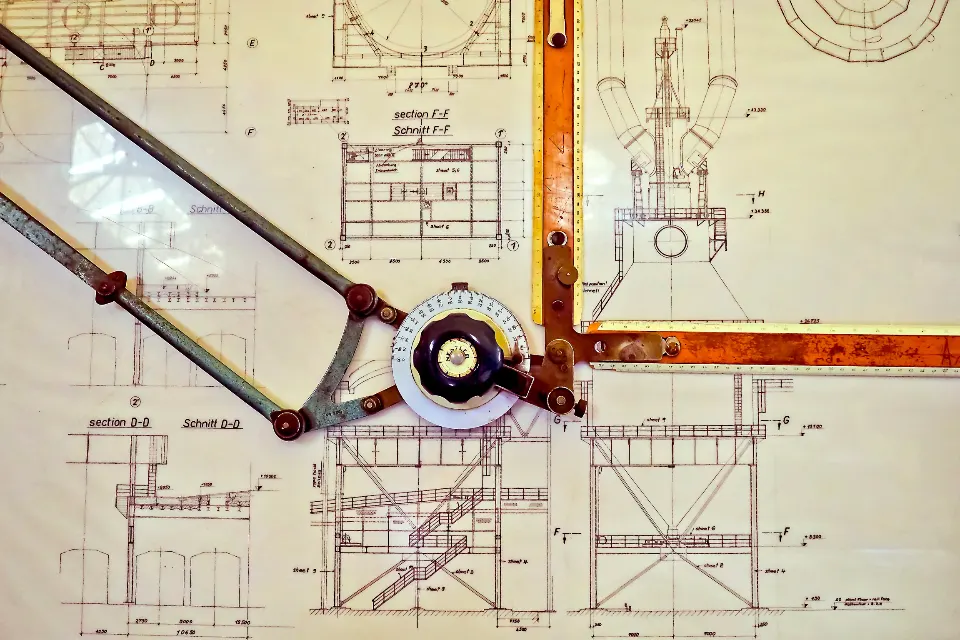
Technical drawings pinned to a drafting board under a mechanical drawing arm, with section views and measurements
A target operating model is a drawing of the future organization: precise enough to build from, short enough to read.

Short answers

A target operating model describes the organization after the change, so the gap to today can be planned and priced.

The strategy says where the organization is going. The target operating model says how it will run when it gets there. Funding a transformation without one means paying for a destination nobody has drawn.

What a target operating model is

A target operating model (TOM) is the written description of how an organization will work after a planned change: who serves which customers, how the work flows, which teams and roles do it, which systems and data carry it, who decides what, and how performance is measured. It is the “to be” version of the operating model. The current operating model is the “as is” version. The difference between the two is the transformation.

Operating model versus target operating model

Every organization has an operating model, written down or not: it is how the place actually runs today. Bain defines an operating model as “the blueprint that defines how a company’s structure, accountabilities, governance, ways of working, and capabilities are configured to execute its strategy.” A target operating model is the same blueprint drawn for a future date, after the strategy has been chosen.

What operating model design is and how it works

Operating model design is the work of choosing the target, dimension by dimension, from the strategy rather than from today’s habits. It describes the current state on each dimension, sets the target level the strategy needs, keeps the dimensions that already fit, and turns the gaps into a roadmap with owners and dates. The five steps and the grid on this page are that work in order.

The three main principles of the operating model

Searchers ask for three principles, and the results page usually answers with “people, process, technology,” which is a list of parts, not principles. The three rules this page works by are its own: the model follows the strategy, never the org chart; change only the dimensions the strategy requires, and write down the ones you keep; and every dimension that moves gets one owner and one measure.

The Border Target Operating Model

A different thing with the same name. The Border Target Operating Model is a UK government programme, published by the Cabinet Office on 29 August 2023, setting out the final plans for a new approach to importing goods into Great Britain, introduced progressively from the end of January 2024. If that is what you searched for, the gov.uk publication linked under Sources is the primary source.

The numbers

Seven published figures on why the operating model, not the strategy, is usually the problem.

Each figure links to the page it was read from. Three are from a 2014 McKinsey survey and are dated as such; nothing here is a client result, and no failure rate is quoted without its source.

9%

of companies are sustained value creators, with profits above their cost of capital and real top-line growth over most of a 10-year period.

Bain & Company, 2026
85%

of respondents in the same Bain research say the barrier is not a lack of strategy, ideas, or opportunities: their organization is holding them back.

Bain & Company, 2026
3×

or more: how far companies with effective operating models outperform competitors in total revenue growth, EBIT growth, and shareholder returns, per Bain.

Bain & Company, 2026
70%

of their strategies’ full potential is all that even top-performing companies achieve, due in no small part to shortcomings in their operating models.

McKinsey, 2025
82%

of executives had experienced an organizational redesign at their current company; 70% of those within the previous two years.

McKinsey Global Survey, 2014
21%

of executives personally involved in a redesign called it a success: fully implemented, objectives met, performance improved.

McKinsey Global Survey, 2014
30%

nearly: the share of fully implemented redesigns that took more than 12 months. An average redesign targeted 5.5 organizational elements.

McKinsey Global Survey, 2014

Six dimensions

Six things a target operating model has to settle, and where each one appears in the published frameworks.

Published frameworks slice the model differently. OC&C's deck uses six dimensions: strategy and leadership, governance, employees and talent, organisational structure, process and service delivery, and systems and technology as the enabler (OC&C, Target Operating Model, October 2024). The Operating Model Canvas uses POLISM: processes, organization, locations, information, suppliers, and management systems (operatingmodelcanvas.com). Bain uses structure, teams and accountabilities; management system; leadership and culture; talent engine; business processes; and technology and data (Bain, 2026). The six below are LA Strategy Institute's own grouping, in the words its transformation page already uses. Each one says which published dimensions it covers and what “done” looks like.

01

Customers and value

Who the organization serves, what it delivers to them, and how the customer experiences it.

OC&C: strategy and leadership. Operating Model Canvas: the value proposition the canvas is built around.

02

Processes and service delivery

How work flows from request to delivery, who does what and when, and what is done in-house, by partners, or in which location.

OC&C: process and service delivery. Canvas: processes, locations, suppliers. Bain: business processes.

03

People, roles and structure

Which teams and roles exist, how they are grouped and sized, what skills they need, and how those skills are built.

OC&C: employees and talent; organizational structure. Canvas: organization. Bain: structure, teams and accountabilities; talent engine.

04

Technology, data and information

Which systems and data support the work, how they connect, and what people still enter or look up by hand.

OC&C: systems and technology (the enabler). Canvas: information. Bain: technology and data.

05

Governance and decision rights

Who decides what, how priorities and budgets are set, and how the center and the units divide responsibility.

OC&C: governance; role of the corporate headquarter. Canvas: management systems. Bain: management system.

06

Measurement and management system

Which measures tell leadership the model is working, how performance is reviewed, and how the model itself is kept current.

OC&C: strategy and leadership (performance culture). Canvas: management systems. Bain: management system; leadership and culture.

A facilitator at a flipchart pointing to a tree of sticky notes while a small group listens
The dimensions are settled one at a time, with the executive who will own each one in the room.

Four levels

Describe each dimension today and at the target on the same four-level scale.

A target operating model is only useful if the current one is described on the same scale, so the gap can be read. The four levels below are this page's working scale for a first leadership conversation, not a validated maturity model.

Level 1

Ad hoc

No agreed way of working. The result depends on which person handles it.

Level 2

Defined

Written down and known, but applied unevenly from team to team.

Level 3

Managed

Applied the same way everywhere and measured.

Level 4

Optimized

Measured, reviewed on a cycle, and improved; a strength the strategy can lean on.

The method

Five steps from strategic guiderails to a roadmap, each with an owner and an output.

The order follows OC&C's four phases (strategic guiderails and status quo; TOM design and business case; detailing; road mapping), with the target-setting step split out because it is where the grid is filled in. OC&C's own framing is to slice the elephant: not everything changes at once, and not every dimension has to change.

Step 01

Write the strategic guiderails and the status quo

Owner: the chief executive with the leadership team. Output: one page of guiderails (what the strategy requires, what is out of bounds, what is prioritized) and a description of today’s operating model on all six dimensions, with its pain points. OC&C’s phase 1 includes a market scan here; LA Strategy Institute’s Market Opportunity Audit covers the same ground.

Step 02

Set the target level per dimension

Owner: one named executive per dimension. Output: the current-versus-target grid, filled in. For each dimension, the level it runs at today and the level the strategy needs. Some rows will not move; write those down as decisions. OC&C’s own guidance is that not every dimension has to be adjusted, and the assessment can justify keeping the status quo.

Step 03

Design the target and the business case

Owner: the transformation lead, with the dimension owners. Output: for each moving dimension, what the target looks like in practice (key processes, organizational elements, responsibilities, capabilities), a benchmark against the best model you can find, and a business case that names the value drivers, the saving potential and when each effect lands. OC&C’s phase 2.

Step 04

Detail only what has to be detailed

Owner: the people who will run each process. Output: process and responsibility detail for the dimensions that move most. OC&C treats detailing as a phase that is run only if necessary or wished for, and notes that TOM projects can comprise phases 1, 2 and 4 alone. A target that runs past about a hundred pages has become a manual rather than a model, in the Operating Model Canvas authors’ phrase.

Step 05

Build the roadmap and the measures

Owner: the transformation lead; the chief executive signs it. Output: a sequenced roadmap with milestones, responsibilities, stakeholders, the capability build-up and early quick wins, plus the measure per dimension that will show the model is working. OC&C’s phase 4, which starts as a high-level roadmap after phase 2 and is completed once detailing ends.

A person drawing a process flow of boxes and arrows on a large whiteboard
Step 3 in practice: the target for a moving dimension drawn as the process it will run, not as a slogan.

The current-versus-target grid

Describe each dimension as it runs today, then as the strategy needs it.

Six dimensions, two columns. For each one, pick the level that describes today and the level the target needs. The table shows which dimensions have to move, by how much, and which can stay. Write the owners on the printed copy; nothing you select here is saved or sent.

1–4The four levels
  1. 1. Ad hoc. No agreed way of working. The result depends on which person handles it.
  2. 2. Defined. Written down and known, but applied unevenly from team to team.
  3. 3. Managed. Applied the same way everywhere and measured.
  4. 4. Optimized. Measured, reviewed on a cycle, and improved; a strength the strategy can lean on.
TToday and target, six dimensions

01 Customers and value. Who the organization serves, what it delivers to them, and how the customer experiences it.

Today
Target

02 Processes and service delivery. How work flows from request to delivery, who does what and when, and what is done in-house, by partners, or in which location.

Today
Target

03 People, roles and structure. Which teams and roles exist, how they are grouped and sized, what skills they need, and how those skills are built.

Today
Target

04 Technology, data and information. Which systems and data support the work, how they connect, and what people still enter or look up by hand.

Today
Target

05 Governance and decision rights. Who decides what, how priorities and budgets are set, and how the center and the units divide responsibility.

Today
Target

06 Measurement and management system. Which measures tell leadership the model is working, how performance is reviewed, and how the model itself is kept current.

Today
Target

Worked example

A regional services firm moves from branch silos to a shared operations center.

An illustrative firm with several branches, each running its own scheduling, invoicing and complaints by email, decides to pool that work in one shared operations center and keep the on-site work in the branches. This is a teaching example, not a client case. Load it into the grid to see the same gap view there.

A leadership team of six people in discussion around a table with a laptop open
Six dimensions, six owners. The one that does not move is written down as a decision, so nobody reopens it.
Illustrative target operating model. Levels: 1 Ad hoc, 2 Defined, 3 Managed, 4 Optimized. Step is the number of levels the dimension moves.
DimensionTodayTargetStepOwner
Customers and value2 Defined3 Managed+1Chief operating officer
Processes and service delivery1 Ad hoc3 Managed+2Head of operations
People, roles and structure2 Defined3 Managed+1Head of people
Technology, data and information1 Ad hoc3 Managed+2IT lead
Governance and decision rights3 Managed3 Managed0Chief executive
Measurement and management system1 Ad hoc2 Defined+1Finance lead

Customers and value

Today. Each branch sets its own service standard; a customer served by two branches notices the difference.

Target. One service promise for every branch, with the customer-facing steps the same everywhere and measured.

Processes and service delivery

Today. Scheduling, invoicing and complaints are handled differently in each branch, mostly by email.

Target. Scheduling, invoicing and complaints run from one shared operations center; branches keep the on-site work.

People, roles and structure

Today. Branch managers run everything, and every branch carries its own back-office roles.

Target. Branch managers lead field teams; back-office roles are pooled in the center with defined skills and career paths.

Technology, data and information

Today. Three scheduling tools and a spreadsheet per branch; customer records are kept per branch.

Target. One scheduling and billing system and one customer record, with the branches reading from it.

Governance and decision rights

Today. Pricing bands and hiring plans are already set centrally, and branch managers decide within them.

Target. No change. This dimension stays as it is, which is a design decision, not an omission.

Measurement and management system

Today. Monthly revenue per branch is the only number every branch reports the same way.

Target. Service time, first-time fix rate and cost per job defined once and reported weekly for every branch and the center.

Reading the table: processes and technology move two levels each, so the roadmap starts there, with the head of operations and the IT lead as owners. Governance stays at level 3 by decision. Measurement moves one level only, because defining three numbers once and reporting them weekly is a smaller change than a shared center, but it is the change that proves the others worked.

Five terms that get confused

Target operating model, operating model, organizational structure, business model, and the canvas.

Most disagreements in a design workshop are about words. Settle these five before the first dimension is discussed.

01

Target operating model

How the organization will work after the change, across all six dimensions, written for a future date. The subject of this page.

02

Operating model

How the organization works today, written down or not. The target operating model is the same description for the future state; the two are compared dimension by dimension to find the gaps.

03

Organizational structure

One dimension of the operating model, not the whole thing: which teams and roles exist, how they are grouped and sized, and who reports to whom. A new structure with the same processes, systems and decision rights is a reorganization, not a new operating model.

04

Business model

What the organization sells, to whom, and how it makes money. The business model sets the value proposition; the operating model is how the organization delivers it. OC&C’s deck starts from business-model elements and derives the operating model from them.

05

Operating model canvas

A one-page tool for a high-level operating model, built around POLISM: processes, organization, locations, information, suppliers, and management systems. Its authors use it for both the “as is” and the “to be” model, at one to ten pages rather than a hundred.

How to know it is done

A target operating model is finished when every dimension has an owner, a measure, and a review date.

None of the pages ranking for this search say how to tell the model is complete. The test is simple: for each of the six dimensions, can leadership point to the thing below? If a dimension cannot be measured, its target was a sentence, not a design.

  • Customers and value. One written service promise per customer group, and a measure of whether customers get it.
  • Processes and service delivery. Each core process has one owner, a documented flow, and a cycle-time or quality measure.
  • People, roles and structure. A role list with headcount and skills per team, and a plan for the skills the target needs but today lacks.
  • Technology, data and information. One system of record per kind of data, and a count of manual hand-offs that falls over the roadmap.
  • Governance and decision rights. A decision-rights list that names who decides, who is consulted, and who is told, for the ten decisions that matter most.
  • Measurement and management system. A short set of measures reviewed on a fixed cycle, with a named owner for each, and a date for the next review of the model itself.

Before the roadmap is funded, score the same change with the change readiness assessment, and map what each moving dimension does to each group's working day with the change impact assessment. The target says where the organization is going; those two say whether it can get there on the date.

Operating model consulting

What an operating model consultant should do, and what LA Strategy Institute's first engagement covers.

Operating model consulting is worth paying for when the leadership team cannot agree on the target levels, when the current model has never been described honestly, or when the business case has to survive a board. The four jobs below are the ones to ask any consultant to do. At LA Strategy Institute, the first engagement is a bounded Market Opportunity Audit, not an open-ended transformation promise; what follows the audit is scoped after it, not before.

01

Verify before designing

Before any design work, confirm what the market will pay for, what the organization actually does today, what the public surface shows, and which constraints are fixed. At LA Strategy Institute that is the Market Opportunity Audit: a bounded first engagement that verifies the market, public surface, operating reality, and constraints before recommending investment.

02

Connect the strategy to the dimensions

Translate the strategy into target levels on the operating model, technology, people, governance, customer experience and measurement, which is how the organizational transformation consulting page describes the connection leadership has to make.

03

Facilitate the decisions, not own them

Run the grid with the people who own the work, challenge targets that came from habit rather than strategy, and leave the decision rights with the leadership team. A consultant who owns the model owns the organization’s excuse when it is not run.

04

Hand over a model that is measured

Leave behind the measure per dimension and a review date, so the model is kept current by the organization and not by the next engagement. What follows the audit is scoped after it, not before.

Source boundary

Built from published frameworks, credited and not copied.

OC&C Strategy Consultants' Target Operating Model deck (October 2024) supplied the six TOM dimensions, the rule that not every dimension has to change, and the four phases. The Operating Model Canvas site, by Andrew Campbell, Mikel Gutierrez and Mark Lancelott, supplied POLISM and the one-to-ten-pages rule. Bain & Company's Winning Operating Models That Convert Strategy to Results (2026) supplied the operating model definition, its six dimensions and three of the figures. McKinsey's explainer What is an operating model? (November 2025) supplied the 70 percent figure and the twelve Organize to Value elements; McKinsey's 2014 Global Survey on organizational redesigns supplied the remaining three figures. The UK Cabinet Office publication supplied the Border Target Operating Model facts. The six dimensions used here, the four levels, the five steps, the grid, the stop rules and the regional services example are LA Strategy Institute's own. None of those authors or organizations created, reviewed, or endorsed this page.

After the grid

Verify the market and the operating reality before the target is funded.

A filled-in grid shows which dimensions have to move. It does not prove the market will pay for the result. The organizational transformation consulting page explains how LA Strategy Institute connects strategy with the operating model, technology, people, governance, customer experience and measurement required to execute it, and the change management page covers the people side once the target is set. Both start with the same bounded Market Opportunity Audit.

Request a Market Opportunity Audit

Questions leadership teams ask

Target operating model questions, answered.

What does TOM stand for?

TOM stands for target operating model: the description of how an organization will work after a planned change, as opposed to the current operating model, which is how it works today.

What is a target operating model framework?

A framework is a fixed list of dimensions to design against. Three published ones are credited on this page: OC&C’s six TOM dimensions, Bain’s six operating model dimensions, and the POLISM list from the Operating Model Canvas. McKinsey’s Organize to Value approach uses twelve elements. The six dimensions used here are LA Strategy Institute’s own grouping, chosen to match the words on its transformation page.

Is there a target operating model template?

The grid on this page is one, with no download, sign-up, or account: six dimensions, a today level and a target level for each, the step between them, and a blank owner column on the printed copy. Nothing you select is saved or sent. It is kept to one page on purpose, following the Operating Model Canvas authors’ rule that a high-level model is one to ten pages.

How long does a target operating model take to design?

There is no standard duration, and this page does not invent one. The only published timing figure cited here is McKinsey’s 2014 survey finding that nearly 30% of fully implemented redesigns lasted more than 12 months, which measures the whole redesign, not the design of the target.

Can an operating model example be used as a template?

As a teaching example, yes; as a target, no. The regional services firm on this page shows what a filled-in grid looks like and how to read it. Your target levels come from your strategy, which is why the grid starts empty and the example is loaded on request.